Kultur im Esel e.V.
Deichstraße 11
37574 Einbeck-Sülbeck

fr13sep20:00 Uhr20:00 Uhr Sally Barker & Vicki Genfan
Eintritt: VV 14 € / AK 16 € Sally Barker Im Alter von 10 Jahren begann Sally Barker mit dem Schreiben von Songs und dem Musizieren
Eintritt: VV 14 € / AK 16 € Sally Barker Im Alter von 10 Jahren begann Sally Barker mit dem Schreiben von Songs und dem Musizieren (Gitarre), inspiriert durch TV-Auftritte der englischen Folk-Pop Sängerin Mary Hopkin und beein- flusst von Bessie Smith, Bonnie Raitt, John Martyn und Aretha Franklin. Ihre ersten Auftritte hatte Sally als "bessere Hälfte" des Folk-Blues Duos Sally and Chris mit dem Bassisten Chris Watson in Pubs und Clubs in den englischen Midlands, gefolgt von Gastauftritten bei Steeleye Span und Gordon Giltrap. 1986 gewann Sally Barker den Kendal Songsearch Competition, und sie tourte zusammen mit bekann- ten Künstlern, wie Fairport Convention, Taj Mahal, Richard Thompson und Roy Harper. Ihr erstes Soloalbum - Sally Barker (1989) - mit Coverversionen ihrer vorgängigen Live-Auftritte war erfolgreich. This Rhythm Is Mine (1990) bewies ihr sich beständig weiterentwickeltes Musik- Potential, und so tourte sie mit Bob Dylan und Robert Plant in Deutschland, wonach ihre zwei ersten Alben 1990 vom Rykodisc-Label auch in den USA veröffentlicht wurden. Vicki Genfan Vicki Genfan begann im Alter von fünf Jahren, Gitarre zu spielen. Sie studierte bis Ende der 1970er Jahre klassische Musik und Jazz am Ithaca College in New York. Neben der Gitarre spielt Genfan auch Klavier, Percussion und Posaune. Im September 2008 gewann sie den Guitar Superstar-Wettbewerb des Musikmagazins Guitar Player in der Great American Music Hall in San Francisco. Vicki Genfan bezeichnet ihre Musikrichtung als "Folk meets Funk". Es ist eine Mischung aus Jazz, Funk, Pop und Weltmusik in einem zeitgenössi- schen Folk-Kontext. Dazu gebietet sie über eine ganze Anzahl ungewöhnlicher Gitarrenstimmungen, Harmonien und Rhythmen, die sie mit treibenden perkussiven Elementen verbindet. Kennzeichnend für ihre Spielweise sind "two handed tappings", oft explosive "tapped" und "slapped harmonics" mit einem oder mehreren Fingern der rechten Hand und geslappte Basslinien. Sally Barker: vocals, guitar Vicki Genfan: guitar, vocals Weitere Infos unter Sally Barker & Vicki Genfan
Deichstraße 11
37574 Einbeck-Sülbeck
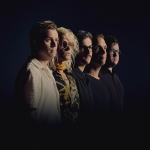 Marius Neset Quintet – Ausverkauft
Kultur im Esel e.V.
We firmly believe that the internet should be available and accessible to anyone, and are committed to providing a website that is accessible to the widest possible audience, regardless of circumstance and ability.
To fulfill this, we aim to adhere as strictly as possible to the World Wide Web Consortium’s (W3C) Web Content Accessibility Guidelines 2.1 (WCAG 2.1) at the AA level. These guidelines explain how to make web content accessible to people with a wide array of disabilities. Complying with those guidelines helps us ensure that the website is accessible to all people: blind people, people with motor impairments, visual impairment, cognitive disabilities, and more.
This website utilizes various technologies that are meant to make it as accessible as possible at all times. We utilize an accessibility interface that allows persons with specific disabilities to adjust the website’s UI (user interface) and design it to their personal needs.
Additionally, the website utilizes an AI-based application that runs in the background and optimizes its accessibility level constantly. This application remediates the website’s HTML, adapts Its functionality and behavior for screen-readers used by the blind users, and for keyboard functions used by individuals with motor impairments.
If you’ve found a malfunction or have ideas for improvement, we’ll be happy to hear from you. You can reach out to the website’s operators by using the following email info@kultur-im-esel.de
Our website implements the ARIA attributes (Accessible Rich Internet Applications) technique, alongside various different behavioral changes, to ensure blind users visiting with screen-readers are able to read, comprehend, and enjoy the website’s functions. As soon as a user with a screen-reader enters your site, they immediately receive a prompt to enter the Screen-Reader Profile so they can browse and operate your site effectively. Here’s how our website covers some of the most important screen-reader requirements, alongside console screenshots of code examples:
Screen-reader optimization: we run a background process that learns the website’s components from top to bottom, to ensure ongoing compliance even when updating the website. In this process, we provide screen-readers with meaningful data using the ARIA set of attributes. For example, we provide accurate form labels; descriptions for actionable icons (social media icons, search icons, cart icons, etc.); validation guidance for form inputs; element roles such as buttons, menus, modal dialogues (popups), and others. Additionally, the background process scans all the website’s images and provides an accurate and meaningful image-object-recognition-based description as an ALT (alternate text) tag for images that are not described. It will also extract texts that are embedded within the image, using an OCR (optical character recognition) technology. To turn on screen-reader adjustments at any time, users need only to press the Alt+1 keyboard combination. Screen-reader users also get automatic announcements to turn the Screen-reader mode on as soon as they enter the website.
These adjustments are compatible with all popular screen readers, including JAWS and NVDA.
Keyboard navigation optimization: The background process also adjusts the website’s HTML, and adds various behaviors using JavaScript code to make the website operable by the keyboard. This includes the ability to navigate the website using the Tab and Shift+Tab keys, operate dropdowns with the arrow keys, close them with Esc, trigger buttons and links using the Enter key, navigate between radio and checkbox elements using the arrow keys, and fill them in with the Spacebar or Enter key.Additionally, keyboard users will find quick-navigation and content-skip menus, available at any time by clicking Alt+1, or as the first elements of the site while navigating with the keyboard. The background process also handles triggered popups by moving the keyboard focus towards them as soon as they appear, and not allow the focus drift outside it.
Users can also use shortcuts such as “M” (menus), “H” (headings), “F” (forms), “B” (buttons), and “G” (graphics) to jump to specific elements.
We aim to support the widest array of browsers and assistive technologies as possible, so our users can choose the best fitting tools for them, with as few limitations as possible. Therefore, we have worked very hard to be able to support all major systems that comprise over 95% of the user market share including Google Chrome, Mozilla Firefox, Apple Safari, Opera and Microsoft Edge, JAWS and NVDA (screen readers).
Despite our very best efforts to allow anybody to adjust the website to their needs. There may still be pages or sections that are not fully accessible, are in the process of becoming accessible, or are lacking an adequate technological solution to make them accessible. Still, we are continually improving our accessibility, adding, updating and improving its options and features, and developing and adopting new technologies. All this is meant to reach the optimal level of accessibility, following technological advancements. For any assistance, please reach out to info@kultur-im-esel.de